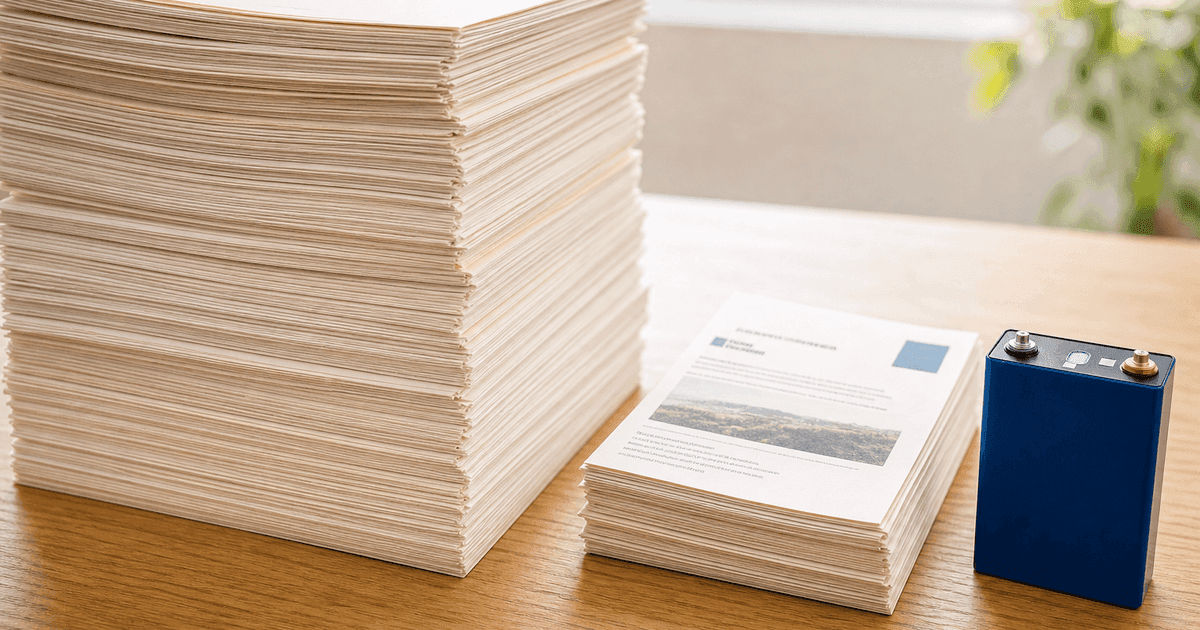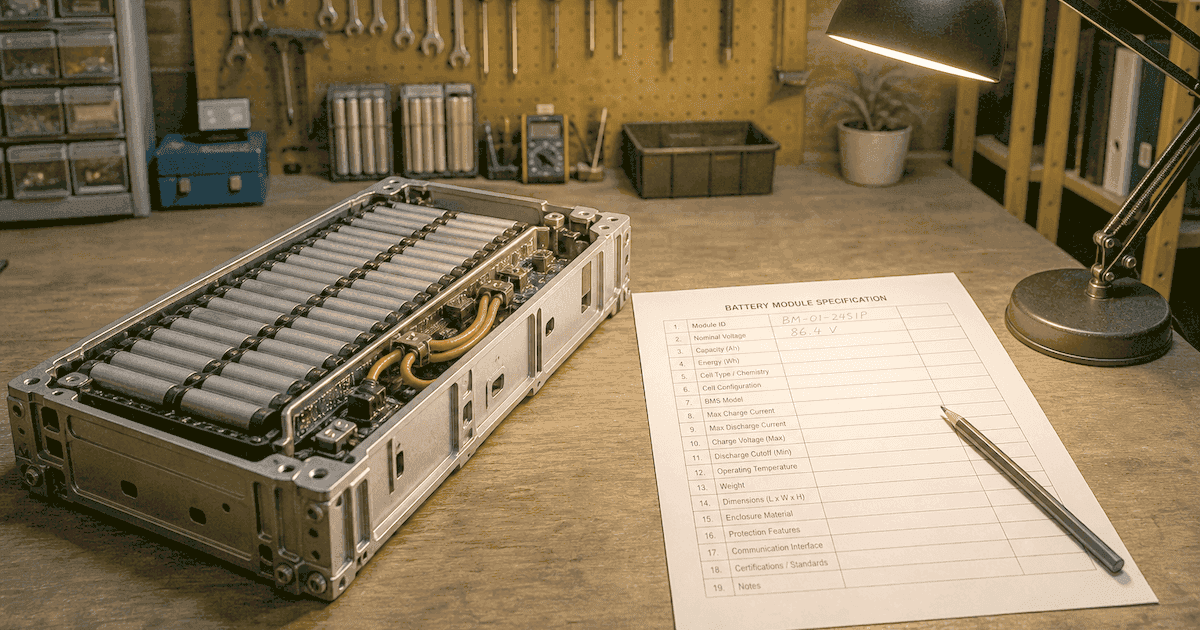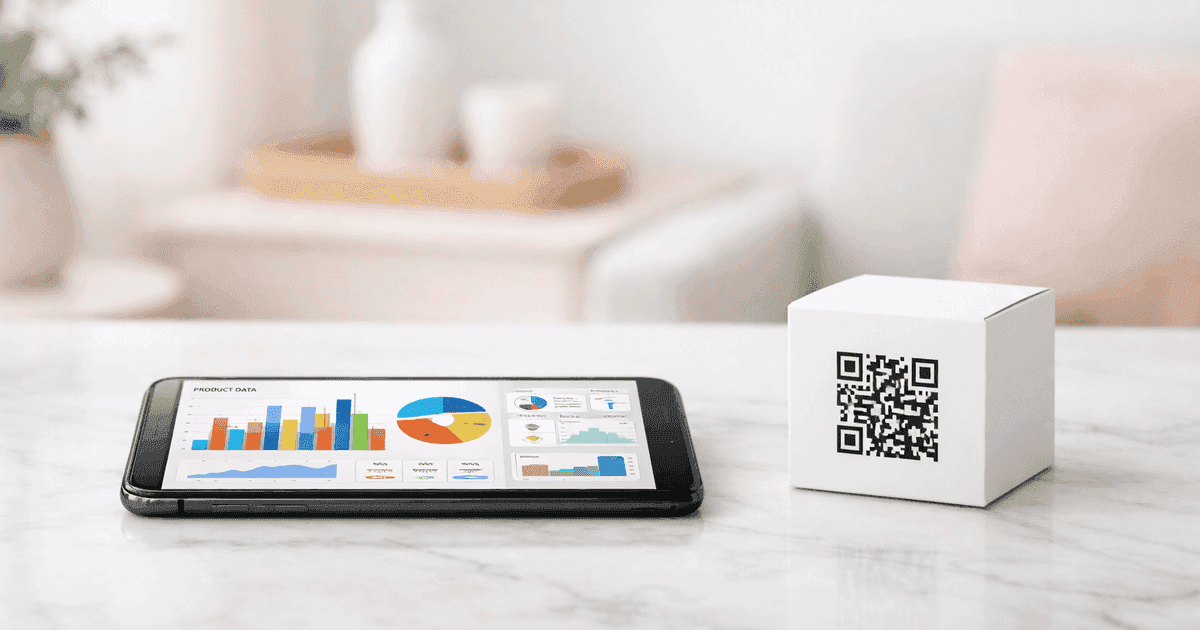
Een Digitaal Productpaspoort (DPP) is een gestandaardiseerd, machineleesbaar digitaal dossier — met gegevens over herkomst, materiaalsamenstelling, repareerbaarheid en recycling van een product — dat de EU nu verplicht stelt voor de meeste fysieke producten die op haar markt worden verkocht onder ESPR-verordening (EU) 2024/1781 (van kracht sinds juli 2024). Merken die al gegevens verzamelen voor bestaande EU-regelgeving (textieletikettering, REACH, CE-markering) hebben waarschijnlijk 40–60% van wat een DPP vereist, waardoor naleving eerder incrementeel is dan dat het in eerste instantie lijkt.
Deze gids legt uit wat DPP's zijn, wat de wettelijke tijdlijn is en welke stappen u nu al kunt ondernemen.
Wat is een Digitaal Productpaspoort?
Een Digitaal Productpaspoort is een gestandaardiseerd digitaal dossier dat aan een fysiek product is gekoppeld. Het bevat informatie over de herkomst, materiaalsamenstelling, reparatie- en demontage-instructies en recyclingrichtlijnen voor het einde van de levensduur.
Beschouw het als het geboortecertificaat, de medische historie én het einde-levensduurplan van een product — gecombineerd in één machineleesbare dataset. Iedereen in de toeleveringsketen — van fabrikant tot recycler — heeft toegang tot de relevante delen van deze gegevens.
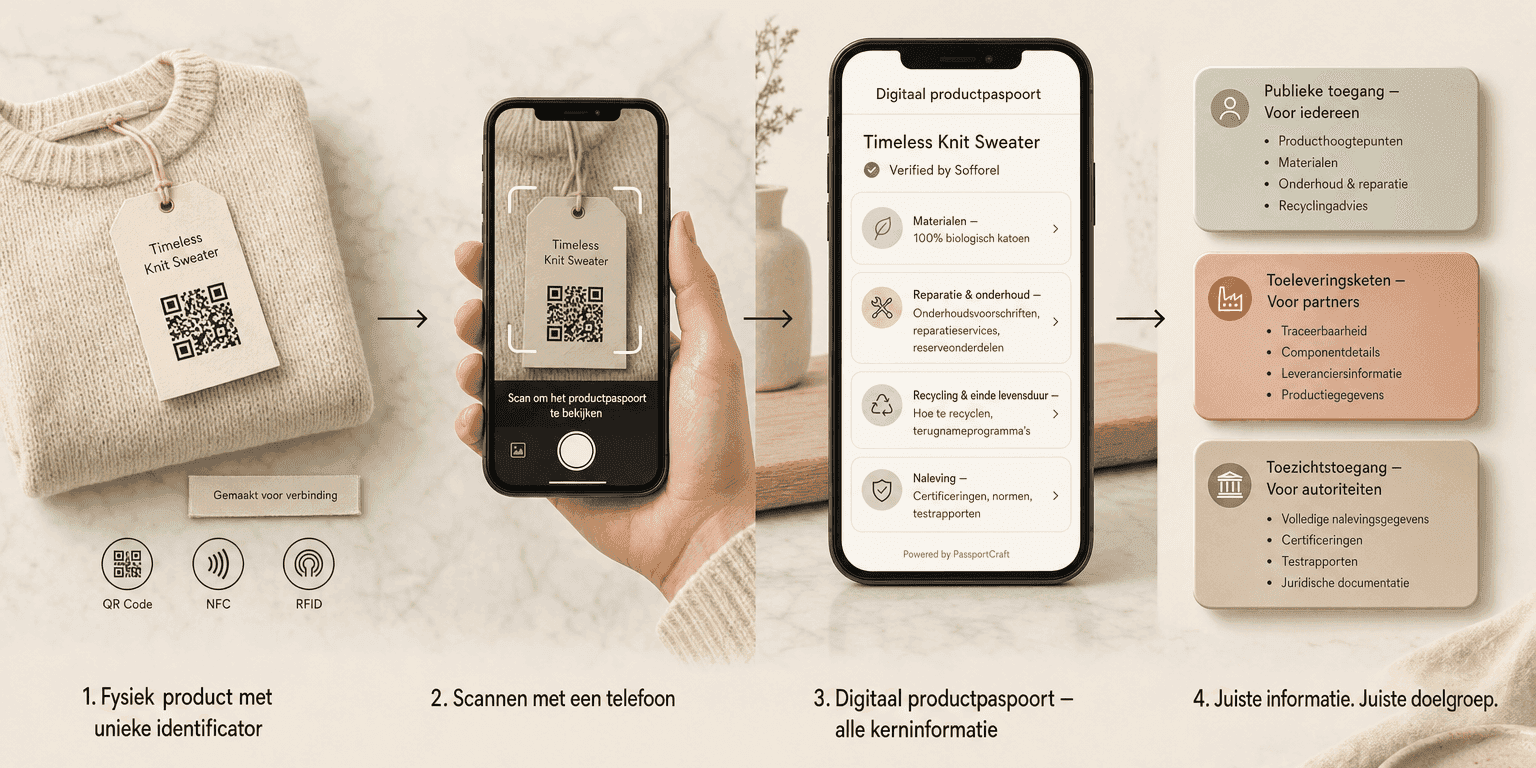
Elk DPP is via een gegevensdrager aan het fysieke product gekoppeld, doorgaans een QR-code, RFID-tag of NFC-chip die op het product of de verpakking is aangebracht. Door te scannen krijgt u direct toegang tot de paspoortgegevens.
Welke informatie bevat een DPP?
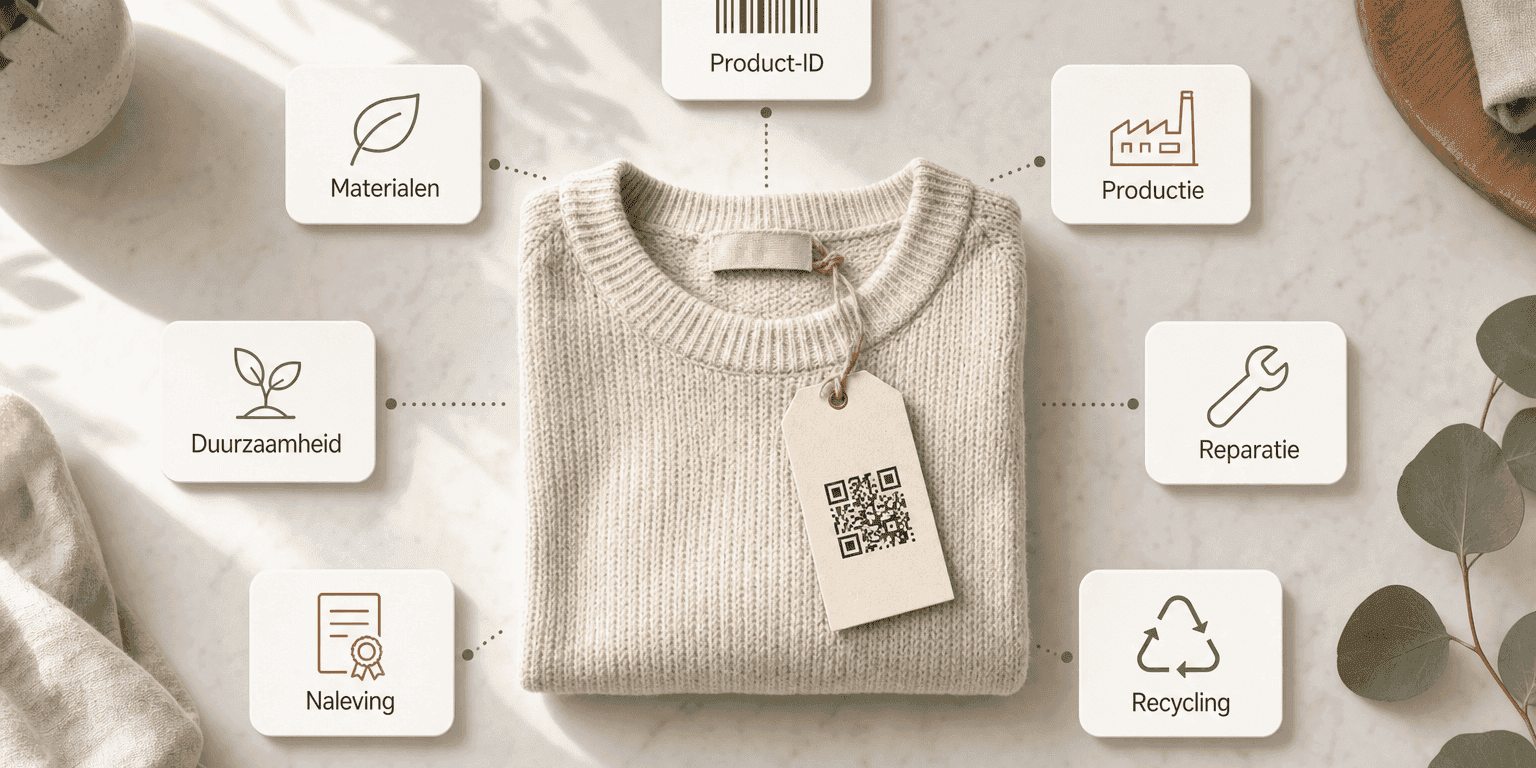
De exacte gegevensvereisten variëren per productcategorie, maar de meeste DPP's bevatten:
- Productidentificatie — unieke identificatienummers, modelnummers, batch-informatie
- Materialen en samenstelling — waaruit het product is vervaardigd, inclusief gevaarlijke stoffen
- Productiedetails — waar en hoe het product is geproduceerd, gegevens over de CO₂-voetafdruk
- Reparatie-informatie — demontage-instructies, beschikbaarheid van reserveonderdelen
- Recyclingrichtlijnen — hoe het product correct te recyclen of af te voeren
- Conformiteitsdocumentatie — certificeringen, conformiteitsverklaringen
- Duurzaamheidscijfers — duurzaamheidsscores, percentages gerecycleerd gehalte
Waarom stelt de EU Digitale Productpaspoorten verplicht?
De DPP-verplichting maakt deel uit van de Verordening inzake ecologisch ontwerp voor duurzame producten (ESPR), die het Europees Parlement in 2024 heeft aangenomen. De ESPR vervangt de oudere Ecodesign-richtlijn en breidt het toepassingsgebied aanzienlijk uit.
De vorige richtlijn gold alleen voor energiegerelateerde producten zoals wasmachines en gloeilampen. De ESPR is van toepassing op vrijwel alle fysieke producten die op de EU-markt worden verkocht, met slechts enkele uitzonderingen (levensmiddelen, diervoeders en geneesmiddelen).
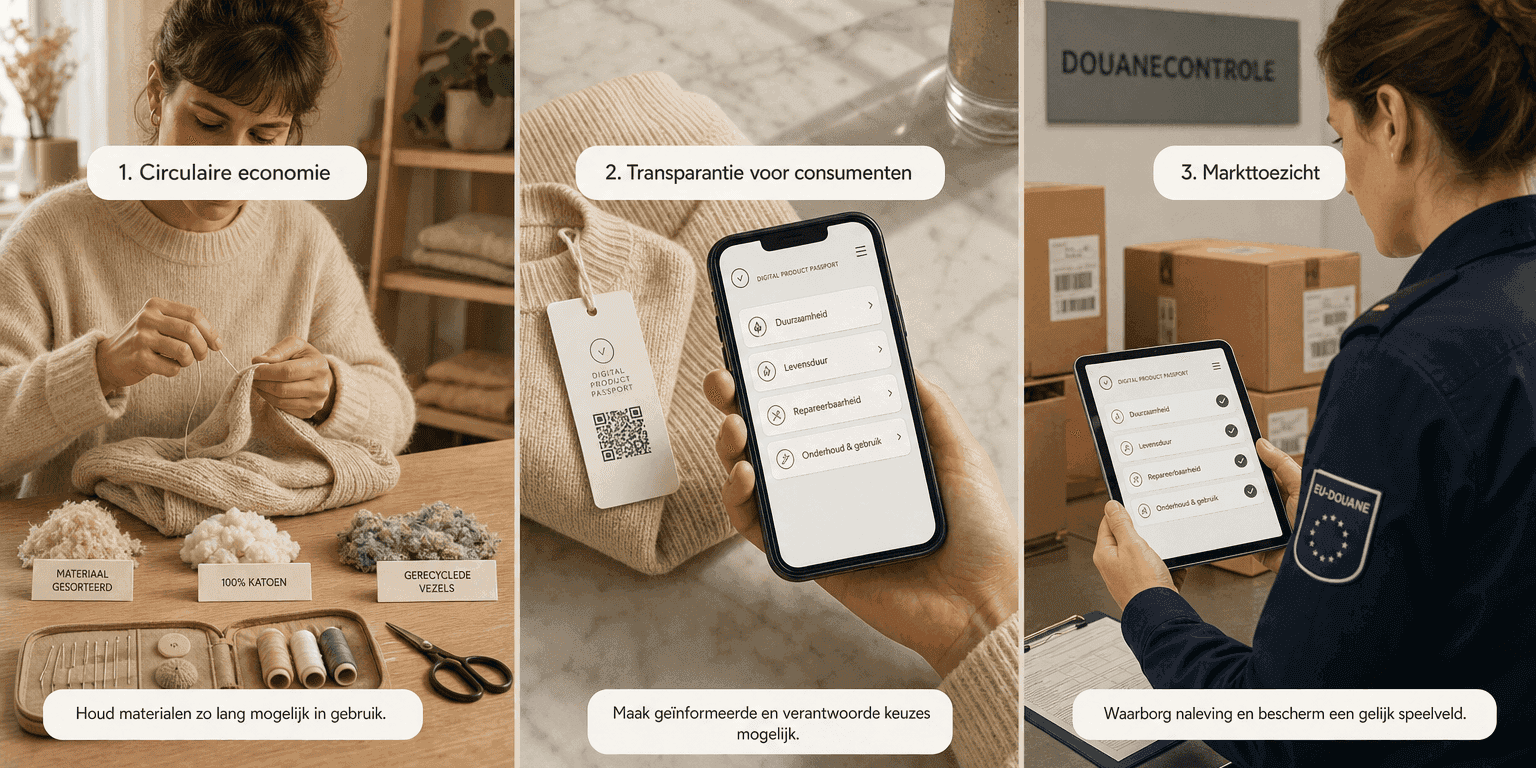
De EU heeft drie kerndoelstellingen met deze verordening:
1. De circulaire economie mogelijk maken
Europa verspilt momenteel enorme hoeveelheden herbruikbare materialen. DPP's maken recycling en reparatie praktisch haalbaar: recyclers krijgen gedetailleerde samenstellingsdata en reparatiebedrijven de technische documentatie die ze nodig hebben. Wanneer een recyclingfaciliteit precies weet welke kunststoffen, metalen en chemicaliën een product bevat, stijgen de materiaaltererugwinningspercentages aanzienlijk.
Nederland loopt hierin voorop met het Nationaal Programma Circulaire Economie, dat streeft naar een volledig circulaire economie in 2050. DPP's sluiten direct aan bij deze nationale ambitie.
2. Consumenten meer inzicht geven
Consumenten hebben momenteel beperkt zicht op hoe producten worden gemaakt. Een DPP geeft kopers toegang tot duurzaamheidsgegevens, levensduurscores en repareerbaarheidsscores vóór aankoop. Deze transparantie verschuift marktprikkels richting duurzamere productie.
3. Markttoezicht verbeteren
Douaneautoriteiten en markttoezichtinstanties hebben betere instrumenten nodig om productconformiteit te verifiëren. DPP's creëren een verifieerbaar digitaal spoor dat toezichthouders aan de grens en in winkels kunnen controleren. Namaakproducten worden moeilijker op de markt te brengen wanneer elk legitiem product een machineleesbare digitale identiteit draagt.
De ESPR-tijdlijn: wanneer moet u voldoen?
De ESPR is in juli 2024 in werking getreden, maar de DPP-vereisten worden gefaseerd ingevoerd over meerdere jaren. De verordening werkt met gedelegeerde handelingen — secundaire wetgeving die de gedetailleerde regels per productcategorie vaststelt.
Dit is de verwachte tijdlijn:
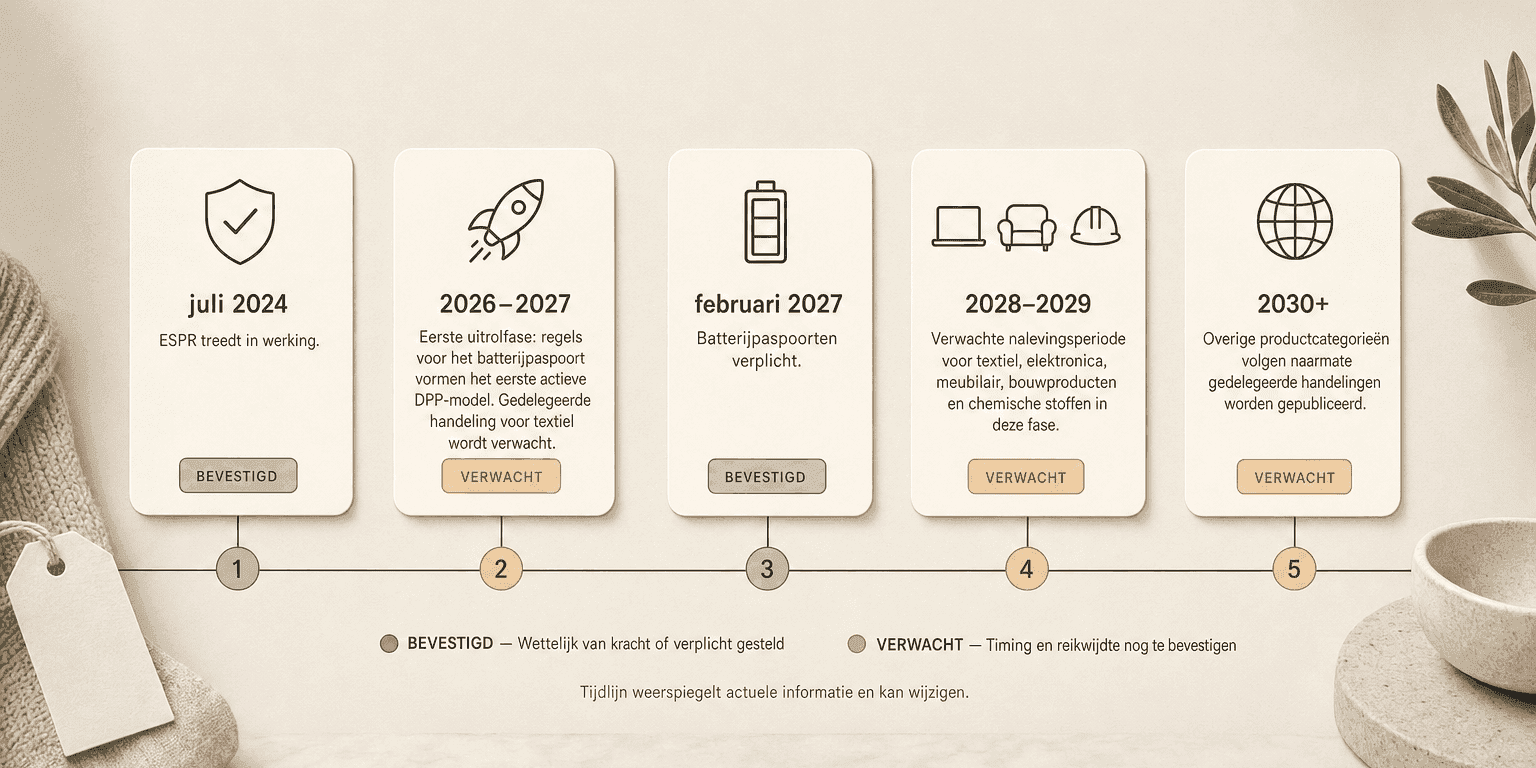
| Fase | Periode | Productcategorieën |
|---|---|---|
| Fase 1 | 2026–2027 | Batterijen (reeds van kracht onder de Batterijverordening), textiel (gedelegeerde handeling verwacht) |
| Fase 2 | 2028–2029 | Elektronica, meubelen, bouwproducten, chemicaliën |
| Fase 3 | 2030+ | Overige productcategorieën naarmate gedelegeerde handelingen worden gepubliceerd |
Batterijen vallen al onder de regeling. De EU-Batterijverordening (los van de ESPR) vereist digitale paspoorten voor EV-batterijen, batterijen voor lichte vervoermiddelen (LMT) en industriële batterijen vanaf februari 2027. Dit is het eerste actieve DPP-mandaat en dient als sjabloon voor alle overige categorieën.
Voor textiel wordt de gedelegeerde handeling verwacht rond eind 2027, met nalevingstermijnen die waarschijnlijk in 2028–2029 vallen. Gedelegeerde handelingen voor elektronica volgen naar verwachting daarna, met naleving rond 2028–2029.
Hoe de gedelegeerde handelingen werken
De ESPR is een kaderverordening — zij legt de wettelijke basis voor DPP's, maar delegeert de productspecifieke details aan de Europese Commissie. Voor elke productcategorie publiceert de Commissie een gedelegeerde handeling die het volgende specificeert:
- Welke gegevensvelden vereist zijn
- Gegevensformaat en interoperabiliteitsnormen
- Wie welke informatie moet aanleveren
- Overgangstermijnen en deadlines
Deze gefaseerde aanpak betekent dat merken tijd hebben om zich voor te bereiden, maar de voorbereiding zelf vergt aanzienlijke inspanning. Wachten tot een gedelegeerde handeling is gepubliceerd om pas dan te gaan plannen, brengt u in een achterstandspositie ten opzichte van concurrenten die eerder zijn begonnen.
Wie heeft een Digitaal Productpaspoort nodig?
Iedere onderneming die producten op de EU-markt brengt moet DPP's aanleveren voor de betreffende productcategorieën. Dit geldt voor:
- Fabrikanten gevestigd in de EU
- Importeurs die producten vanuit derde landen de EU binnenbrengen
- Gemachtigde vertegenwoordigers die namens niet-EU-fabrikanten optreden
- Merken en retailers die onder eigen label verkopen (private-labelproducten)
De verplichting rust op degene die het product voor het eerst op de EU-markt beschikbaar stelt. Als u in China produceert en in Nederland verkoopt, bent u (of uw in de EU gevestigde importeur) verantwoordelijk voor het aanmaken en onderhouden van het DPP.
Gelden voor het mkb en grote fabrikanten dezelfde DPP-verplichtingen?
De ESPR erkent de lasten voor het midden- en kleinbedrijf (mkb). De gedelegeerde handelingen kunnen vereenvoudigde eisen of verlengde overgangstermijnen bevatten voor kleinere ondernemingen. De kernverplichting geldt echter ongeacht de bedrijfsomvang — als u betreffende producten op de EU-markt verkoopt, hebt u DPP's nodig.
Er is geen mkb-vrijstelling van de kern-DPP-verplichting. De enige mkb-specifieke bepaling in de ESPR is een beperkte vertraging voor het vernietigingsverbod op onverkochte goederen. Elk merk dat betreffende producten op de EU-markt brengt moet voldoen, of u nu 5 of 5.000 medewerkers hebt. Zie onze gids over DPP-uitdagingen voor een eerlijke blik op waar kleine merken mee te maken krijgen.
Voor een grote fabrikant geldt dezelfde datum. Daar is de moeilijkheid operationeel en niet regelgevend: elke gedelegeerde handeling bepaalt of één paspoort een model, een productiepartij of een individueel exemplaar dekt, en het werk groeit met het niveau dat zij noemt.
Vroegtijdig beginnen geeft het mkb een voorsprong: het nu opbouwen van dataverzamelingsprocessen is veel minder ontwrichtend dan haasten onder tijdsdruk.
Hoe werken Digitale Productpaspoorten in de praktijk?
Het DPP-systeem omvat meerdere samenhangende componenten:
Wilt u zien hoe deze onderdelen samenkomen op een echt product? Bekijk onze voorbeelden van digitale productpaspoorten.
Gegevensdragers
Elk fysiek product heeft een scanbare identificatie nodig — de gegevensdrager. Opties zijn:
- QR-codes — kosteneffectief, eenvoudig te printen op verpakking of labels
- RFID-tags — geschikt voor logistiek en voorraadbeheer, scanbaar zonder direct zicht
- NFC-chips — ideaal voor consumentinteractie (tikken om te scannen met een smartphone)
- Data Matrix-codes — compact, geschikt voor kleine producten
De gegevensdrager verwijst naar een URL waar de paspoortgegevens worden gehost. Het scannen van de code geeft direct toegang tot de relevante informatie.
Gegevenshosting
DPP-gegevens moeten worden gehost op systemen die aan specifieke beschikbaarheids- en interoperabiliteitseisen voldoen. De gegevens moeten gedurende een vastgestelde periode na het op de markt brengen van het product toegankelijk blijven (doorgaans de verwachte levensduur van het product plus een bufferperiode).
De EU ontwikkelt een centraal DPP-register dat als het gezaghebbende indexsysteem zal functioneren. Individuele DPP's kunnen door fabrikanten of externe platforms worden gehost, maar moeten in het centrale systeem worden geregistreerd naarmate de regels van elke productcategorie van kracht worden — zie wie moet registreren, en wanneer.
Toegangsniveaus
Niet alle DPP-gegevens zijn openbaar. De ESPR definieert verschillende toegangsniveaus:
- Openbare toegang — basisproductinformatie, duurzaamheidsgegevens, voor consumenten relevante details
- Toegang toeleveringsketen — gedetailleerde samenstellingsgegevens, productiespecificaties (toegankelijk voor zakenpartners)
- Toegang voor toezichthouders — volledige dataset inclusief vertrouwelijke informatie (uitsluitend toegankelijk voor markttoezichtautoriteiten)
Deze gelaagde aanpak beschermt bedrijfsgeheimen en waarborgt tegelijkertijd transparantie waar het ertoe doet.
Een groot deel van de gegevens die een DPP vereist is niet nieuw. Als u al voldoet aan de EU-Textielverordening (materiaalsamenstelling), REACH (zorgwekkende stoffen) en CE-markering (conformiteitsdocumentatie), hebt u de basis voor ruwweg de helft van de DPP-gegevensvelden. De uitdaging is het digitaliseren en structureren van die gegevens, niet het vanaf nul genereren. Onze gids over DPP-gegevensvereisten toont precies wat bevestigd is en wat verwacht wordt.
Hoeveel DPP-gegevens hebt u al?
Een van de grootste misvattingen over het DPP is dat het merken verplicht om een volledig nieuwe dataset vanaf nul te genereren. In werkelijkheid schrijven meerdere bestaande EU-verordeningen al veel van dezelfde informatie voor — alleen in andere formaten. Als u al producten op de EU-markt verkoopt en voldoet aan de huidige etikettering-, veiligheids- en chemicaliënregelgeving, hebt u een aanzienlijke voorsprong.
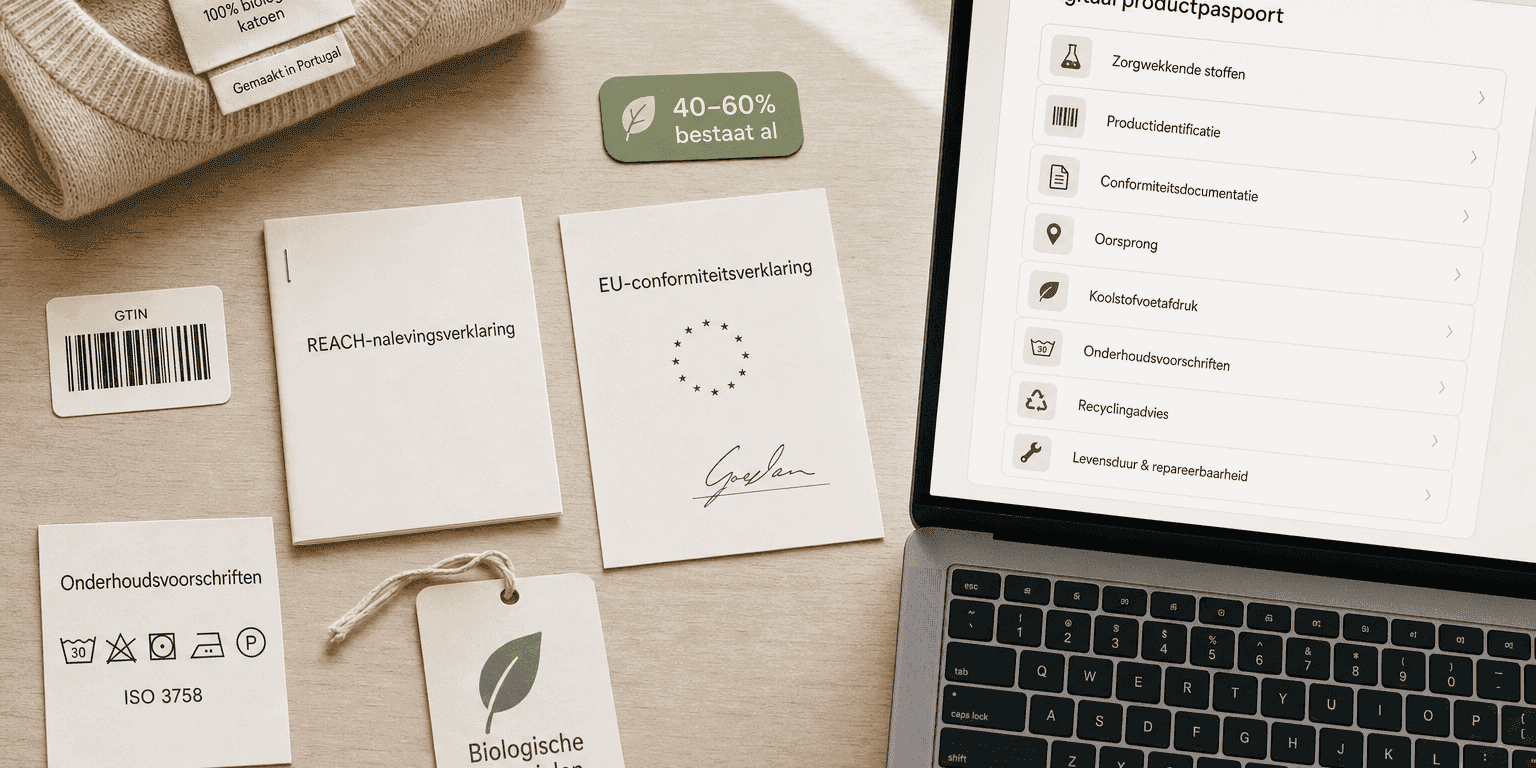
| DPP-gegevenscategorie | Al vereist onder | Wat nieuw is voor DPP |
|---|---|---|
| Materiaalsamenstelling (vezel %, gewicht) | Textielverordening (EU 1007/2011) — verplicht op kledinglabels sinds 2012 | Gedigitaliseerd, machineleesbaar formaat; gedetailleerdere uitsplitsing per component |
| Zorgwekkende stoffen | REACH-verordening (EG 1907/2006) — SVHC-verklaringen al vereist | Gestructureerd digitaal formaat; gekoppeld aan productidentificatie |
| Productidentificatie (GTIN, model) | GS1-standaarden — al gebruikt door 80%+ van retailmerken voor barcodes | Identificatienummers op serie-/batchniveau; GS1 Digital Link-URI-formaat (GS1, 2024) |
| Conformiteitsdocumentatie | CE-markering onder relevante EU-richtlijnen | Digitaal, machineleesbaar; geregistreerd in EU DPP-register |
| Land van productie | Herkomstmarkeringsregels variëren per producttype | Uitgebreid naar multi-tier toeleveringsketenlocaties (gefaseerde uitrol) |
| Onderhoudsinstructies | ISO 3758-onderhoudssymbolen — al op kledinglabels | Digitaal formaat; gekoppeld aan reparatie- en einde-levensduurrichtlijnen |
| CO₂-voetafdruk | Nieuw voor de meeste productcategorieën | Volledige levenscyclusberekeningsmethodologie nog te bepalen |
| Recycling-/einde-levensduurrichtlijnen | AEEA-richtlijn (elektronica); beperkt voor textiel | Uitgebreid naar alle producttypen; gestandaardiseerd formaat |
| Duurzaamheids-/repareerbaarheidsscores | Nieuwe vereiste onder ESPR | Scoringsmethodologie en drempels nog te bepalen per gedelegeerde handeling |
Voor de meeste merken die al op de EU-markt verkopen, komt ruwweg de helft van de DPP-gegevenscategorieën overeen met informatie die u al verzamelt of rapporteert onder bestaande regelgeving. De echte nieuwe vereisten — CO₂-voetafdrukberekeningen, duurzaamheidsscoring en multi-tier traceerbaarheid van de toeleveringsketen — zijn de gebieden waar de voorbereidingsinspanning zich op moet concentreren. Onze gids over DPP-gegevensvereisten splitst elke categorie uit per betrouwbaarheidsniveau.
Hoe begint u met de voorbereiding op DPP-naleving?
Zelfs als uw specifieke productcategorie nog geen gedelegeerde handeling heeft, kunt u nu al beginnen met de voorbereiding. Bedrijven die vroeg starten, doorlopen een soepeler nalevingstraject en kunnen zelfs concurrentievoordeel behalen uit de transparantie die DPP's bieden.
Stap 1: Breng uw productgegevens in kaart
Inventariseer welke gegevens u al over uw producten verzamelt. Identificeer hiaten tussen uw huidige gegevens en de verwachte DPP-vereisten. Veelvoorkomende hiaten zijn:
- Gedetailleerde materiaalsamenstelling
- Gegevens over de herkomst in de toeleveringsketen (voorbij tier 1-leveranciers)
- CO₂-voetafdrukberekeningen
- Reparatie- en demontagedocumentatie
Stap 2: Betrek uw toeleveringsketen
DPP-gegevens komen van meerdere punten in de toeleveringsketen. Begin gesprekken met uw leveranciers over het delen van gegevens. U hebt samenstellingsdata, herkomstinformatie en duurzaamheidscijfers van uw toeleveranciers nodig.
Stap 3: Kies uw technologieplatform
U hebt een systeem nodig om uw DPP's te creëren, hosten en beheren. Zoek naar platforms die de opkomende ESPR-gegevensstandaarden ondersteunen en de vereiste gegevensdragers kunnen genereren (QR-codes, RFID-programmering, enz.).
Stap 4: Start een pilot met een productlijn
Probeer niet in één keer DPP's te maken voor uw hele assortiment. Kies een representatieve productlijn en bouw daarvoor een compleet DPP. Deze pilot brengt hiaten in gegevens en procesknelpunten aan het licht die u kunt oplossen voordat u opschaalt.
Stap 5: Volg de gedelegeerde handelingen
Blijf op de hoogte van de regelgevingsontwikkelingen in uw productcategorie. De Europese Commissie publiceert concepten voor openbare consultatie voordat gedelegeerde handelingen worden afgerond, zodat u vooraf op de hoogte bent van de specifieke vereisten.
Veelgestelde vragen
Hoeveel kost DPP-naleving?
De kosten variëren aanzienlijk op basis van productcomplexiteit, catalogusomvang en bestaande gegevensinfrastructuur. De belangrijkste kostenfactoren zijn gegevensverzameling (met name uit toeleveringsketens), platformkosten en doorlopend gegevensonderhoud. Mkb-bedrijven moeten budget reserveren voor zowel initiële opzet als jaarlijkse operationele kosten.
Kan ik een bestaande QR-code gebruiken voor mijn DPP?
U kunt QR-codes als gegevensdrager gebruiken, maar ze moeten verwijzen naar een DPP-conform data-eindpunt. Bestaande marketing-QR-codes die naar een websitepagina verwijzen, voldoen niet. De QR-code moet verwijzen naar gestructureerde paspoortgegevens in het vereiste formaat.
Wat gebeurt er als ik niet voldoe?
Niet-naleving van de ESPR kan ertoe leiden dat producten van de EU-markt worden geweerd. Lidstaten stellen specifieke sancties vast, waaronder boetes, productterugroepingen en importverboden. De exacte handhavingsmechanismen worden gespecificeerd in de gedelegeerde handelingen per productcategorie.
Geldt de DPP-verplichting ook voor producten die online worden verkocht?
Ja. De DPP-verplichting geldt voor alle producten die op de EU-markt worden gebracht, ongeacht het verkoopkanaal. Online marktplaatsen en e-commerceverkopers moeten ervoor zorgen dat hun producten een geldig DPP dragen. De EU werkt daarnaast aan regels die online marktplaatsen verplichten DPP-naleving te controleren voordat producten worden aangeboden.
Hoe lang moet ik een DPP onderhouden?
Het DPP moet ten minste gedurende de verwachte levensduur van het product toegankelijk blijven, en in sommige gevallen langer ter ondersteuning van recycling aan het einde van de levensduur. Specifieke bewaartermijnen worden vastgesteld in elke gedelegeerde handeling. Voor duurzame goederen kan dit 10 jaar of langer betekenen.
Aan de slag met PassportCraft
PassportCraft helpt de bedrijven die producten op de EU-markt brengen om EU-conforme Digitale Productpaspoorten te maken zonder de complexiteit en kosten van enterprise-oplossingen. Ons platform verzorgt gegevensverzameling, QR-codegeneratie en DPP-hosting, zodat u zich kunt richten op uw producten.
Begin gratis met PassportCraft en maak uw eerste Digitaal Productpaspoort, of bekijk onze tarieven om te zien hoe PassportCraft bij uw bedrijf past.
Over de auteur